• Zur Metanavigation
  • Zur Hauptnavigation
  • Zur Suche
  • Zum Inhalt
  • Zur Subnavigation
  • Zum Seitenfuß
  • University of Hamburg
  • For journalists
  • Staff Service Portal0
  • STiNE
https://www.kus.uni-hamburg.de/aktuelles.json?recentnews=true
  • Institutions and target groups
    • Einrichtungen
      • Faculties

        • Faculty of Law
        • Faculty of Business, Economics and Social Sciences
        • Faculty of Medicine
        • Faculty of Education
        • Faculty of Humanities
        • Faculty of Mathematics, Informatics and Natural Sciences
        • Faculty of Psychology and Human Movement Science
        • University of Hamburg Business School
      • Services

        • Study Information Net STiNE
        • Surfmail
        • Exchange
        • Staff Service Portal
        • Learning Platforms
        • Katalogplus – Catalogue of Hamburg Libraries
        • SharePoint
      • Student facilities and services

        • Campus Center
        • Career Center
        • PIASTA
        • AStA (student council)
        • University Sports
        • University Music
        • Family Office
        • University Language Center
        • General Languages
        • Office of Affairs for Students with Disabilities or Chronic Diseases
        • Departmental libraries
        • Healthy Campus
      • Further facilities and services

        • The Cluster of Excellence CLICCS
        • The Cluster of Excellence CUI
        • The Cluster of Excellence Quantum Universe
        • The Cluster of Excellence Understanding Written Artefacts
        • Hamburg Research Academy
        • Pier Plus
        • Hamburg Center for University Teaching and Learning (HUL)
        • Hub for Crossdisciplinary Learning (HCL)
        • CEN
        • Museums and collections
        • University Archives (in German)
        • Regional Computing Center (RRZ)
        • University Administration
        • Knowledge Exchange Agency
        • The Unikontor Shop (in German)
    • Target groups

      • Prospective students
      • Students
      • International prospective students
      • Young researchers
      • Researchers
      • Instructors
      • Staff
      • Prospective continuing education students
      • Alumni
      • Journalists
      • Refugees (in German only)
    Close
  • Language
    • English
    • Deutsch
  • /en/sitemap.json
University of Hamburg - to research, to teach, to educate and form, to homepage
Atmospheric Science
Atmospheric Science
  • About us
    • News
    • Contact
    • Event Calendar
    • Library
    • IT-Service: CEN-IT
    • Internal
  • Studies
    • Meteorology (B.Sc.)
    • Atmospheric Science (M.Sc.)
    • Student Council
    • StuMeTa
  • Research
    • Climate
    • Clouds
    • Data Assimilation and Predictability
    • Numerical Modelling
    • Radiation
    • Satellite Meteorology
    • Urban Climate
    • Waves, Instabilities and Turbulence
    • Weather
  • Working Groups
    • Atmospheric Dynamics and Predictability
    • Atmospheric Measurements / Process Modelling
    • Atmospheric Turbulence and Boundary Layers
    • Climate, Radiation, Remote Sensing
    • Clouds and Convection
    • Mesoscale and Microscale Modelling – MeMi
    • Stratified Turbulence in the Middle Atmosphere
    • Technical Meteorology
    • Visual Data Analysis (partner group within HCDS)
  • Current Weather
    • Webcam Geomatikum
  • People

Photo: Earth Science and Remote Sensing Unit, NASA Johnson Space Center

  1. UHH
  2. MIN
  3. Department of Earth System Sciences
  4. Atmospheric Science
  5. WGs
  6. RaRe
  7. News
  8. New ARTS article

New ARTS article

11 April 2025

ARTS Logo

Photo: UHH/Lemke

The article "The atmospheric radiative transfer simulator ARTS, version 2.6 — Deep python integration" (JQSRT) by Stefan Bühler et al. describes the latest version and new features of the radiative transfer model ARTS.

The model can be used to simulate remote sensing observations, such as what weather satellites measure. This is necessary for analyzing these data. The measured radiation values are compared with the model, allowing conclusions to be drawn about the state of the atmosphere.

On the other hand, the model can calculate radiative energy fluxes in the atmosphere, which manifest locally as heating or cooling rates. These calculations are essential for weather and climate models. Our model can perform these calculations very accurately and thus serves as a reference for simpler radiation schemes used in circulation models like ICON.

The model is freely available. Further information can be found at https://radiativetransfer.org.

Latest articles

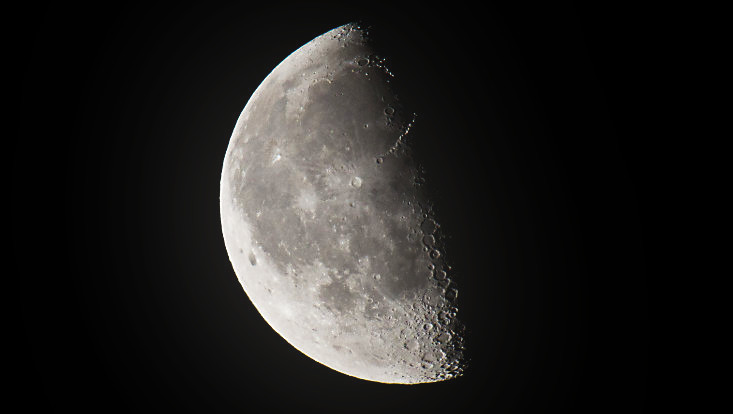
Moon

Photo: Privat/Lemke

18.12.2025|Research
DFG Project MW-Luna successfully completed

The project “MW-Luna”, funded by the German Research Foundation (DFG), was successfully completed in August. A total of 9,000 lunar observations from weather satellites were analyzed, establishing the Moon as a reliable flux reference for microwave and infrared instruments. This approach makes...

Arctic Weather Satellite like a bird

Photo: ESA/Mlabspace

27.11.2025|Research
New EPS-Sterna satellites poised to transform weather observations
EUMETSAT is nearing full approval of the EPS-Sterna mission, a constellation of polar-orbiting microsatellites designed to deliver an unprecedented stream of microwave observations of atmospheric temperature, humidity and clouds, data essential for more accurate weather prediction.

Last update: 14 April 2025

  • Feedback
  • Legal notice
  • Privacy statement
  • Accessibility
  • Site map

University of Hamburg

Innovating and Cooperating for a Sustainable Future in a Digital Age

  • Instagram
  • Facebook
  • Bluesky
  • YouTube
  • LinkedIn
    • Studies
    • Prospective students
    • Continuing education
    • Research
    • Teaching at UHH
    • Doctoral studies
    • Job opportunities
    • Knowledge exchange
    • University
    • Excellence
    • Faculties
    • Alumni
    • Contact
    • Campus Navigator
    • Emergencies, safety and security
    • Antidiscrimination
audit familiengerechte hochschule
Audit
HRK-Audit
System accreditation

© 2026 University of Hamburg. All rights reserved